
2026-08-17
Best LMS Options for Small Schools on a Budget
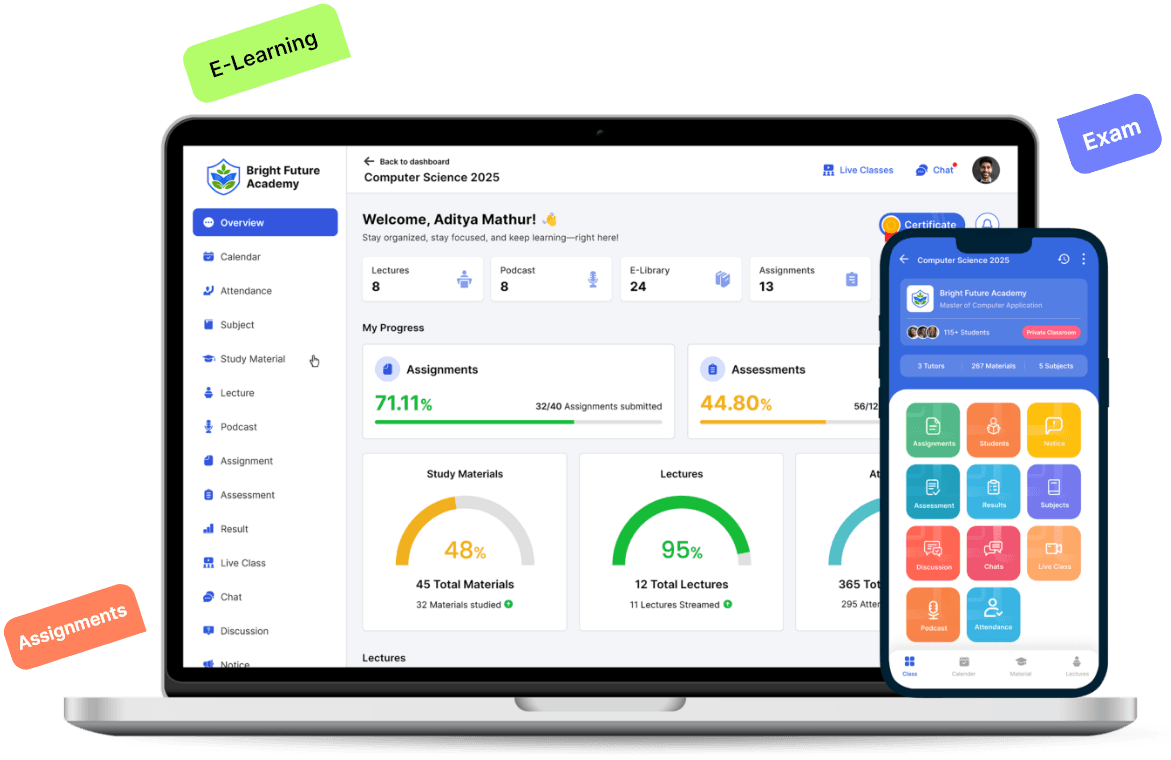
Search for the "best LMS for small schools" and most results are ranked lists comparing feature counts, as if the school with the longest checklist wins. A small school with a tight budget and no dedicated IT staff needs a different kind of answer — one built around cost predictability, how fast the platform can actually go live, and whether help is available when something goes wrong. This is a decision framework, not a single winner.
Factor 1: Cost Predictability
A small school's budget doesn't have much room for surprises. The question isn't just "what does it cost now" but "what does it cost when we grow from 40 students to 80, or add a second campus." Three pricing shapes show up across the LMS market, and each behaves differently as a school grows:
- Per-student pricing: cost scales with active enrollment, so a small school pays a small-school price, and the vendor should be able to tell you the price at a larger student count before you get there
- Flat-fee pricing: one fixed price regardless of size, predictable but often means paying for capacity a small school doesn't use, with a steep jump if enrollment crosses the plan's cap
- Self-hosted, nominally free: no license fee, but hosting, security maintenance, and plugin costs are real, ongoing expenses that don't show up as a single predictable line item
Features That Matter at Small Scale, and Features That Don't
Feature-comparison lists tend to reward whichever platform has the most rows, which isn't the same as being the best fit for a 40-student school. Some capabilities matter regardless of size: attendance tracking, assessments, a place for lecture content, and a way to communicate with parents and students. Others exist mainly for institutions with a scale a small school hasn't reached yet: elaborate role hierarchies for dozens of staff types, department-level reporting, or white-labeling features aimed at multi-branch operations.
It's worth resisting the pull toward the plan with the longest feature list. Paying for capacity you won't use for years, if ever, isn't cost predictability, it's a different kind of waste. The more useful question is whether a plan's core features cover what your school does day to day, with room to grow into the next tier if enrollment expands.
Factor 2: Setup Time
A small school often doesn't have months to spend on implementation before the next term starts. Managed, fully hosted platforms are generally the fastest path to live — The Academix, for instance, can have a branded platform operational in 3-5 days, with full implementation including content migration typically completing within 2-3 weeks. Self-hosted open-source options add real setup time on top of that: server configuration, plugin selection, and testing realistically run weeks to months depending on how much customization is needed, and that timeline depends heavily on whether the school has someone technical already available to do the work.
Factor 3: Support Availability
When a small school's LMS breaks on the first day of exams, the question of who answers the phone matters more than any feature comparison. A managed platform with a support team behind it means a ticket gets a response with some expected turnaround. A self-hosted, community-supported platform means searching forums and documentation, which works for well-known issues but leaves a gap during an unfamiliar, time-sensitive problem. Neither model is wrong — but a school without in-house technical staff should weigh this factor heavily, since they have no fallback if the community answer doesn't arrive in time.
A Real Data Point: The Academix's Pricing
For a concrete example rather than an abstract one: The Academix's Basic Campus plan, usually for 15-99 students, starts from ₹1,500/month. The final price is quoted based on your exact student count and specific needs, with hosting, security, updates, and support part of the plan. Book a demo or get in touch for the real number for a school your size. That's the honest answer for one specific plan, not a claim that it's the only right answer for every small school.
Where This Doesn't Fit
A managed platform isn't automatically right for every small school. A school with an existing IT teacher or volunteer already comfortable running a server, and specific customization needs that only an open-source plugin ecosystem covers, may get more value from self-hosting despite the added maintenance. A school testing whether a formal LMS is worth adopting at all might reasonably start with lighter tools — a shared drive, a messaging group, a spreadsheet — before committing budget to any platform, free or paid.
How to Actually Decide
Work through the three factors in order for your specific school. First, calculate real cost at your current enrollment and at a plausible enrollment two years out, using a written quote for each enrollment level rather than an advertised starting number. Second, check whether the setup timeline fits your calendar — a platform quoting months of configuration isn't a fit if the new term starts in six weeks. Third, ask what happens when something breaks on a Tuesday morning: a support ticket with a response time, or a forum post and a wait.
A small school with limited budget and no dedicated IT staff usually lands on a managed platform once those three factors are weighed honestly, because the predictability and support outweigh the flexibility a self-hosted option offers. A school with existing technical capacity may reach a different, equally reasonable conclusion. The point of the framework is to reach the right answer for your school's actual situation, not to arrive at a predetermined one.